Kinbaku play (Kinbaku/Shibari) is one genre within BDSM that uses rope to restrain the body and create a scene.
It is not merely restraint—its defining traits include cultural elements that evolved uniquely in Japan, such as visual beauty, structural beauty, and psychological direction.
While it draws attention in Japanese adult videos (AV), art photography, and fetish communities, it is also a type of play that can be dangerous if copied without proper knowledge.
This article covers the following.
・The meaning and origins of Kinbaku
・How it differs from simple restraint play
・Essential tools and rope types
・Must-know safety fundamentals
・Common mistakes beginners should avoid
For anyone curious about Kinbaku, this is a complete, practical explanation of what you’ll want to know.
What Is Kinbaku Play?
Kinbaku / Shibari is not simply “making someone unable to move with rope.”
The lines the rope draws across the skin, the placement of knots, the rhythm of breathing, and the psychology created by being “unable to move”—in other words:
① visual composition (beauty)
② rope patterns (technique and style)
③ the staging of a power dynamic (air, mood, and story)
All of it together forms a complete fetish expression.
Overseas, the words “Shibari” and “Kinbaku” are widely recognized, and since the 1990s they’ve also been discussed in contexts like photography and performance art.
It’s also often explained that modern Kinbaku aesthetics were inspired by Hojōjutsu (a traditional technique for restraining people with rope).
Even in Hojōjutsu, there was attention paid to “how it looks.”
So Kinbaku, bluntly speaking, isn’t just “restraint”—it’s a thicker, more deliberate kind of “designed domination.”
To the viewer it offers beauty; to the person being tied it offers tension and release; to the one tying it offers a sense of control—same rope, yet it flips multiple switches of desire.
That’s the power of Kinbaku.
The Roots of Kinbaku: The Forbidden Aesthetics Left by Edo-Era “Hojōjutsu”
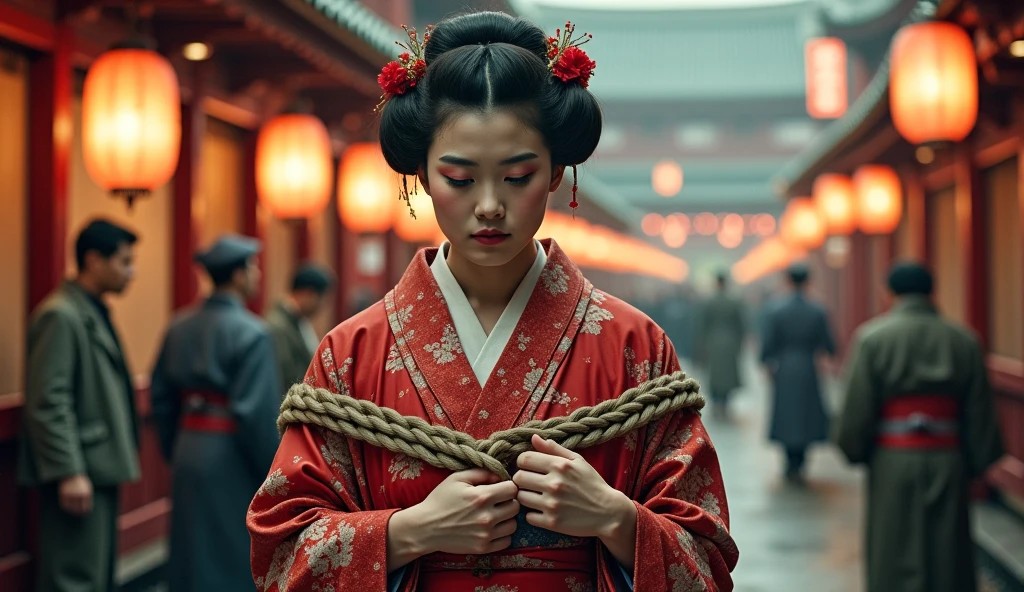
If you trace Kinbaku back to its origins, the destination isn’t “erotic play.”
It’s something more raw, more cold—“Hojōjutsu (honawa),” refined on the ground in Edo-era reality.
Hojōjutsu was a practical technique meant to prevent criminals from escaping, keep them from resisting, and transport them securely.
But it didn’t end as mere restraint.
Edo society burned punishment into people’s memory by making it “visible.”
There were strict “forms” and etiquette in how people were tied.
Ties that changed by status and position—who was bound, how tightly, and how they were treated. The rope silently spoke the social hierarchy.
Visuality as public warning—humiliation visible even from a distance, a reality you couldn’t run from. The crowd’s gaze hardened the body even further.
Structural beauty—lines built for function end up forming a “shape.”
Rationality somehow creates a sensual outline.
This is the point.
It wasn’t a culture created for erotica from the start.
And yet, the moment “being tied,” “being watched,” and “being unable to move” come together, human imagination starts arousing people all on its own.
Edo rope had that kind of “space” for imagination.
And then, after the war, came the era of photography and magazines.
Taboo gets printed, and “the pleasure of the gaze” becomes a product.
When the “structure meant to be seen” within Hojōjutsu met the “desire to see” of SM magazines, rope slowly transformed—from a practical tool into a fetish symbol.
Kinbaku is not just stimulation.
It’s a hybrid of taboo and beauty built up by Japan’s rope culture—and the doorway begins with Edo-era Hojōjutsu.
The Difference Between Restraint Play and Kinbaku Play
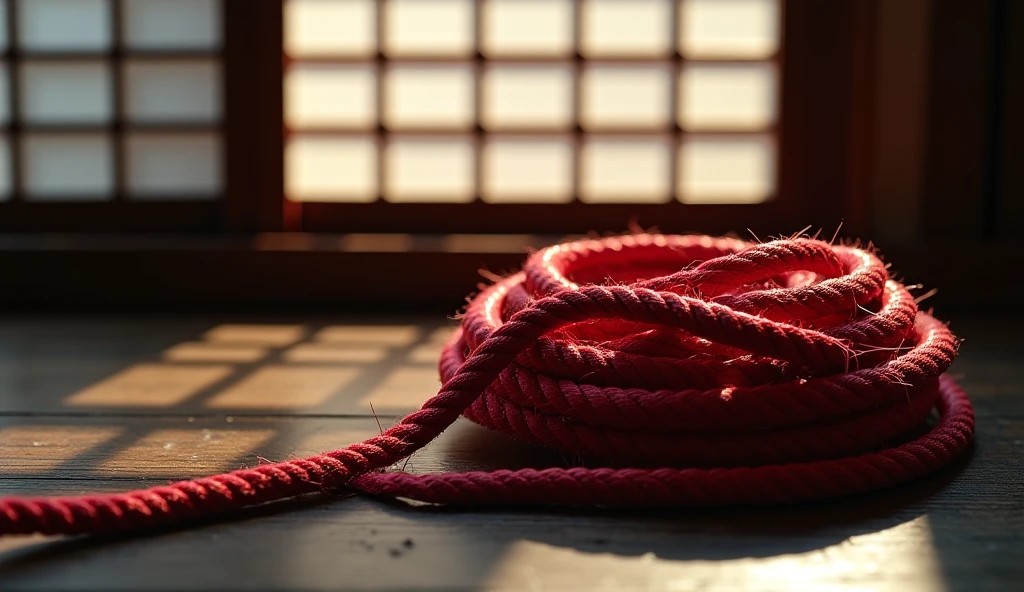
A lot of people confuse this.
Bottom line: restraint is about “making someone unable to move,” while Kinbaku is about “using rope to create something worth seeing.”
They look similar, but what hits—the exact pleasure point—is completely different.
What Restraint Play Is
Restraint play is, frankly, simple.
It has one goal: take away physical freedom.
Goal: create a state where someone can’t move
Tools: anything works—belts, handcuffs, tape, scarves, etc.
What matters: the situation itself—“can’t resist,” “can’t escape.”
With restraint, the “result” is everything.
The moment it’s fixed in place, it’s complete.
Speaking honestly from the male side, the strength is that you can “enter the non-everyday quickly.”
On the other hand, if you do it roughly, it can easily look like nothing but aggression.
If you can’t build the mood, it goes cold instantly.
That’s the trap.
What Kinbaku Play Is
Kinbaku is “tying” too, but the underlying idea is different.
The goal is to build “structure” with rope, and to control the atmosphere through direction.
Goal: structural beauty and staging through rope (appearance and mood).
Tools: rope is the baseline.
What matters: how it’s tied, how it looks, rope placement, and the completeness of the “picture” created with the body.
Kinbaku doesn’t jump straight to the finish.
Rope touches skin, lines multiply, escape routes slowly disappear.
That “process” thickens the air.
In other words, Kinbaku isn’t just about creating immobility—it’s a set of “show,” “seduce,” and “make them imagine.”
Male desire looks simple, but it’s annoyingly complicated—often it’s not the decisive one-shot that gets us, but the “story” of being slowly cornered.
Kinbaku hits that nerve directly.
To summarize, this is the difference.
Restraint = result-focused (once they can’t move, it’s “done”)
Kinbaku = process and structure-focused (the more rope lines increase, the more the world-building completes itself.)
Put even more simply:
Restraint is “function.”
Kinbaku is “direction and aesthetics.”
That’s the gap.
Which One Suits You—Restraint or Kinbaku?
If you want a rough guideline, it’s this.
If you want speed and easy-to-understand taboo → restraint tends to hit harder.
If you’re weak to visuals, atmosphere, and a “story of being dominated” → Kinbaku tends to hit harder.
And in reality, many people don’t stick to just one—they switch between the clarity of restraint and the staging power of Kinbaku depending on the moment.
Because the male heart, while simple, is also greedy.
Bare-Minimum Safety Notes
Games that tie or fix someone in place are built on safety even more than emotions.
Push too far and it becomes hell instantly. Mood won’t matter anymore.
Don’t “endure” pain or numbness. (Decide a clear signal for immediate stop in advance.)
Avoid anything involving breathing or the neck area.
Don’t do it when unwell or after drinking.
Just holding these basics changes the same act of “tying” from “just dangerous” into “deep play.”
Tools You Need for Kinbaku: Rope Types and How to Choose
- Soft against the skin
- No prep needed before use
- Less likely to cause trouble
- Strong “visual impact” (best for staging)
- Prep and maintenance are assumed
- Can cause chafing, so you need understanding
- Hard to cut; dangerous in emergencies
- Not designed for the human body in this way
- Doesn’t loosen; too stiff; accidents happen easier
The most important thing in Kinbaku isn’t “mood” or “technique”—it’s safety first.
Only when safety is secured can rope start drawing “lines” over skin and the air slowly thicken. Miss this, and it becomes a painful accident.
Silicone Rope (Beginner-Friendly)
Bottom line: for your first rope, this is the easiest and safest-leaning option.
Soft: less likely to “dig” into the skin when it touches.
Ready to use right after purchase: usually no annoying prep is needed.
Less likely to cause skin issues: minimal fuzz, so it’s less likely to chafe and turn skin red.
The strength of silicone is that it still gives you the “presence” of rope, while being less likely to rough up the skin immediately.
If the first session pulls you back into reality with pain, it ruins everything—so choose materials that help you get into the right headspace first.
How to Choose (Beginner Tips)
Choose one that isn’t overly sticky on the surface (too “rubbery” can be hard to handle)
Avoid anything with a strong weird smell (you’re using it very close to the body, so it becomes stress)
If possible, pick one clearly labeled for “Kinbaku/bondage use” (cheap general-purpose ropes are hit-or-miss)
Hemp Rope (Intermediate and Up)
Hemp rope, honestly, has “too much visual power.”
The rope texture, the color, the way shadows fall—each added line along the skin starts loudly speaking “domination.”
For visual staging, it’s top-tier.
Best-in-class for atmosphere and visual direction: it photographs and films on a different level.
But prep is mandatory: ignore fuzz and stiffness and you’re asking for problems.
You must manage stiffness and fuzz: you need to use it knowing it can cause chafing.
Take this lightly and you’ll go straight from “hot” to “skin trouble.”
Hemp is “erotic,” but as a material it’s wild.
I don’t recommend using it on the body without knowledge right away.
Who Hemp Rope Is For
People who want to prioritize visual completeness above all
People who don’t mind investing time to “raise” and maintain their tools
People who can prioritize “safe enjoyment” (and won’t get sloppy from arousal)
Why Climbing Rope Is a Hard NO
Climbing rope is built for a completely different purpose.
It’s so good at what it does that bringing it into body-based play can become dangerous.
✖ Hard to cut: “can’t cut immediately” in an emergency can be fatal.
✖ Dangerous in emergencies: it doesn’t loosen, doesn’t relax, and is stiff—accidents increase.
✖ Not designed for the human body in this context: it’s made to protect lives, not to be gentle on skin.
Kinbaku is based on “controlled restriction.”
Climbing rope tends to lock restriction too rigidly and makes it easy to slip out of the “play” zone—so it’s a bad match for fetish use.
Also: The “Minimum Safety Items” You Should Have
In some ways, these matter even more than the rope itself.
The more heated it gets, the more people get sloppy with judgment.
Safe, cuttable scissors (rescue-style safety scissors): emergency insurance. Mandatory.
A signal word (the “stop” word): decide it in advance without embarrassment.
Skin care: if you chafe easily, plan on moisturizing/protection (push too hard and you won’t get a “next time”).
Tool Bottom Line: Beginners Start with Silicone; Hemp Can Wait
Your first rope (your first choice) should be silicone rope: easy to start and safety-leaning
Hemp rope looks amazing, but requires time and knowledge
Don’t use climbing rope: hard to cut, stiff, dangerous.
The shortest route to making the atmosphere erotic isn’t “more extreme” content—it’s an environment where you can immerse safely.
Rope choice is the entrance to that.
Kinbaku Is a High-Difficulty Play: What’s Hard Isn’t “Technique,” It’s “Responsibility”
Kinbaku is an advanced sexual play where you are entrusted with a partner’s body and psychology.
That’s why it’s high difficulty.
The core difficulty is usually these three.
Kinbaku Requires Reading the Woman’s Reactions
Kinbaku is play that “builds the atmosphere” in response to the woman’s reactions.
The better someone is, the more they prioritize a woman’s raw reactions over the visual look of the tie.
Kinbaku Must Not Skip Safety Checks
Some people think safety checks kill the mood—but it’s the opposite.
The more secure she feels, the deeper she can immerse into an abnormal play like Kinbaku.
Kinbaku Needs an Atmosphere Where the Woman Can Say “That’s Enough for Today”
If a man loses to his own Kinbaku desire and gets sloppy, the woman won’t want to do Kinbaku again.
The more someone can read her psychology and end the play at the right time, the more they can make Kinbaku into something she can’t forget.
Beginners don’t need to aim for advanced tying methods right away.
First, set the steps, keep it short and intense, and end with afterglow.
This is the first step that helps men improve faster—and also leaves women satisfied.
Kinbaku Play: Frequently Asked Questions (FAQ)
Q1. Is Kinbaku supposed to hurt?
Pain is not a requirement.
If pain or numbness appears, the basic rule is stop immediately.
Kinbaku is not an endurance contest.
Q2. Will Kinbaku leave marks?
It depends on the person, the rope material, and the duration.
Some women are affected the next day, so keep it short, keep it loose, and pay attention to skin care for safety.
Q3. For beginners, is silicone better than hemp?
Bottom line: yes.
No prep, fewer skin troubles, and fewer early failures.
Because hemp is more “showy” and harder to handle, it’s safer to use hemp after you’ve gained experience.
Q4. Do you need a signal word (“stop word”) during Kinbaku?
It’s mandatory.
“Stop!” can be said as a line in the heat of the moment, so using it as the only signal can cause accidents.
Two words are enough (two levels)
“Stop” = pause (the man stops, checks her condition, adjusts)
“End” = fully end (no questions asked—untie immediately)
That’s enough.
If you decide in advance “Stop is check / End is immediate release,” you won’t hesitate.
Optional backup if she can’t speak
Tap 3 times = Stop
Rapid tapping = End
Q5. What if she gets scared midway?
Stop immediately.
If you make her endure fear, you kill what makes Kinbaku good.
This is play where safety turns into sensuality—so stopping without hesitation is the correct answer.
Q6. Can Kinbaku be enjoyed outside of couples?
Yes.
But it’s decided less by “rope skill” and more by whether you can create safety.
Decide the stop signals in advance.: NO / “Stop” “End” / time (keep it short)
Don’t get greedy.: keep the first time light and end it (a man who exits well gets chosen again)
Kinbaku isn’t about roughness—it’s a special kind of play that only men who earn trust through carefulness can enjoy deeply.
Q7. Isn’t climbing rope or “strong rope” safer?
No—the opposite.
In Kinbaku, “can’t cut” and “can’t loosen” in emergencies is dangerous.
Choose rope designed for body/fetish use, and also prepare tools that can cut safely.
Q8. What should I start with first?
Before rope, decide consent, signals, and time.
Then get silicone rope plus safe, cuttable scissors.
Once that’s set, you can eliminate many of the common Kinbaku failures.
3-Line Conclusion (Start With This)
- Kinbaku is not just “restraint.” It’s play that designs atmosphere and psychology with rope.
- The people who fail all do the same thing: they skip consent, signals (stop/end), and time.
- Start short and intense. The man who ends with afterglow gets chosen again.
No Partner for Kinbaku (You Want to Enjoy It in Real Life)—What Then?
Rather than rushing to seduce someone, it’s faster to secure a partner first—someone who understands consent and rules.

|
Get 70pt free with PCMAX registration
|
Want to Grasp the Kinbaku “World” First (Find Your Own Trigger)?
Before trying it in real life, knowing what “pattern” hits you keeps you from drifting.
In the end, it also makes things safer and more successful.
Learn Japan’s SM world. (Mistress Land)

Find the pattern that hits you through video (XCREAM)

*Tip: Once you understand what you personally react to more than “what looks good,” your real-life progression becomes cleaner.
One last word
The strongest man in Kinbaku isn’t the one who ties best.
It’s the man who can create safety and respect the exit.
That’s why taboo can actually land as pleasure.




コメント